1609 / 1850 / 1859
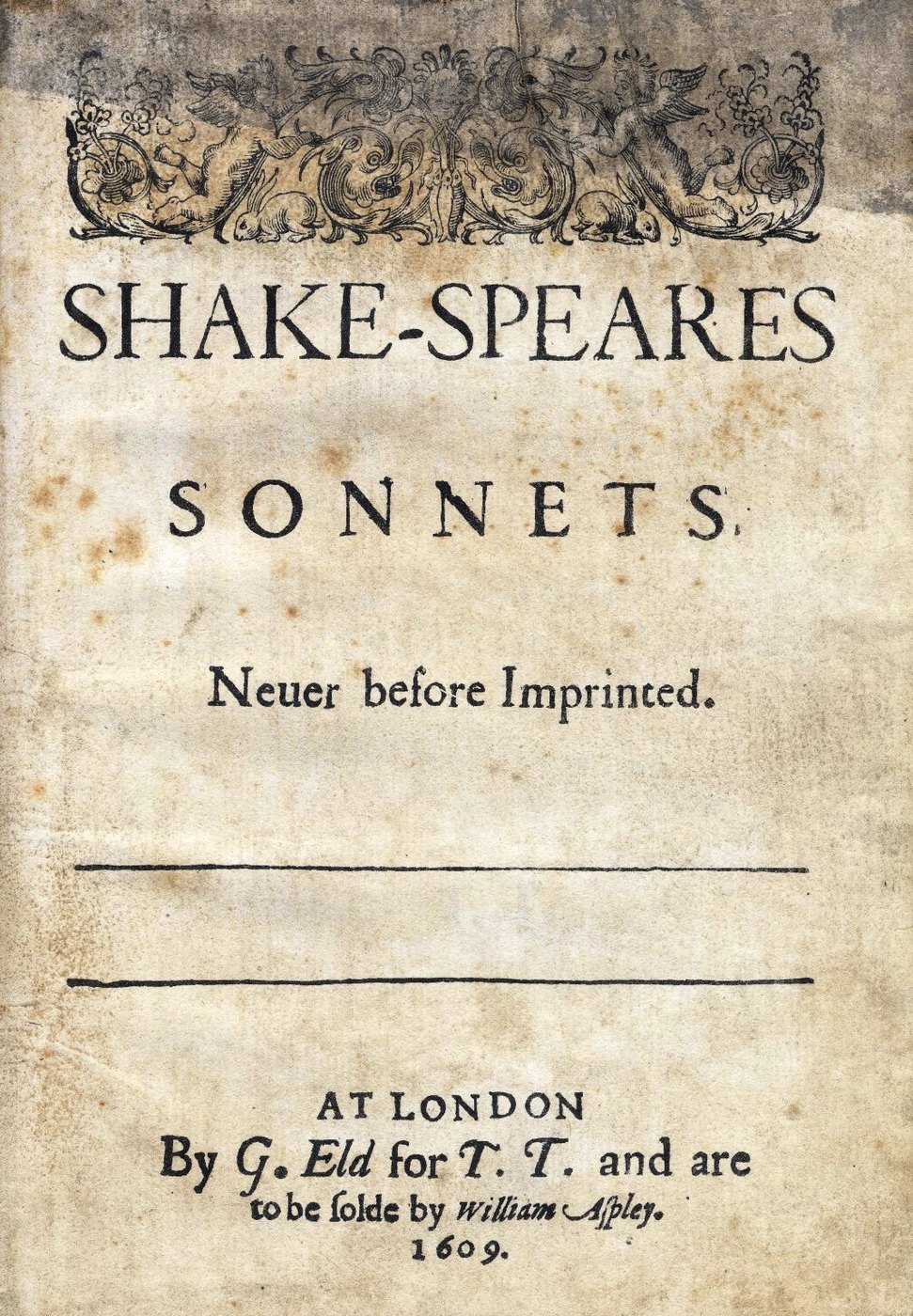
London, 1609. Shakespeare's sonnets are printed, addressed to a beloved he does not name. In 1850 Elizabeth Barrett Browning publishes sonnets she wrote to Robert Browning before they married. In 1859, in a novel, George Eliot has a woman speak at a last parting.
Can one person carry all of it?
William Shakespeare, Sonnet 116Let me not to the marriage of true minds
Admit impediments. Love is not love
Which alters when it alteration finds,
Or bends with the remover to remove.
O no, it is an ever-fixed mark
That looks on tempests and is never shaken;
It is the star to every wandering bark,
Whose worth's unknown, although his height be taken.
Love's not Time's fool, though rosy lips and cheeks
Within his bending sickle's compass come;
Love alters not with his brief hours and weeks,
But bears it out even to the edge of doom.
If this be error and upon me proved,
I never writ, nor no man ever loved.
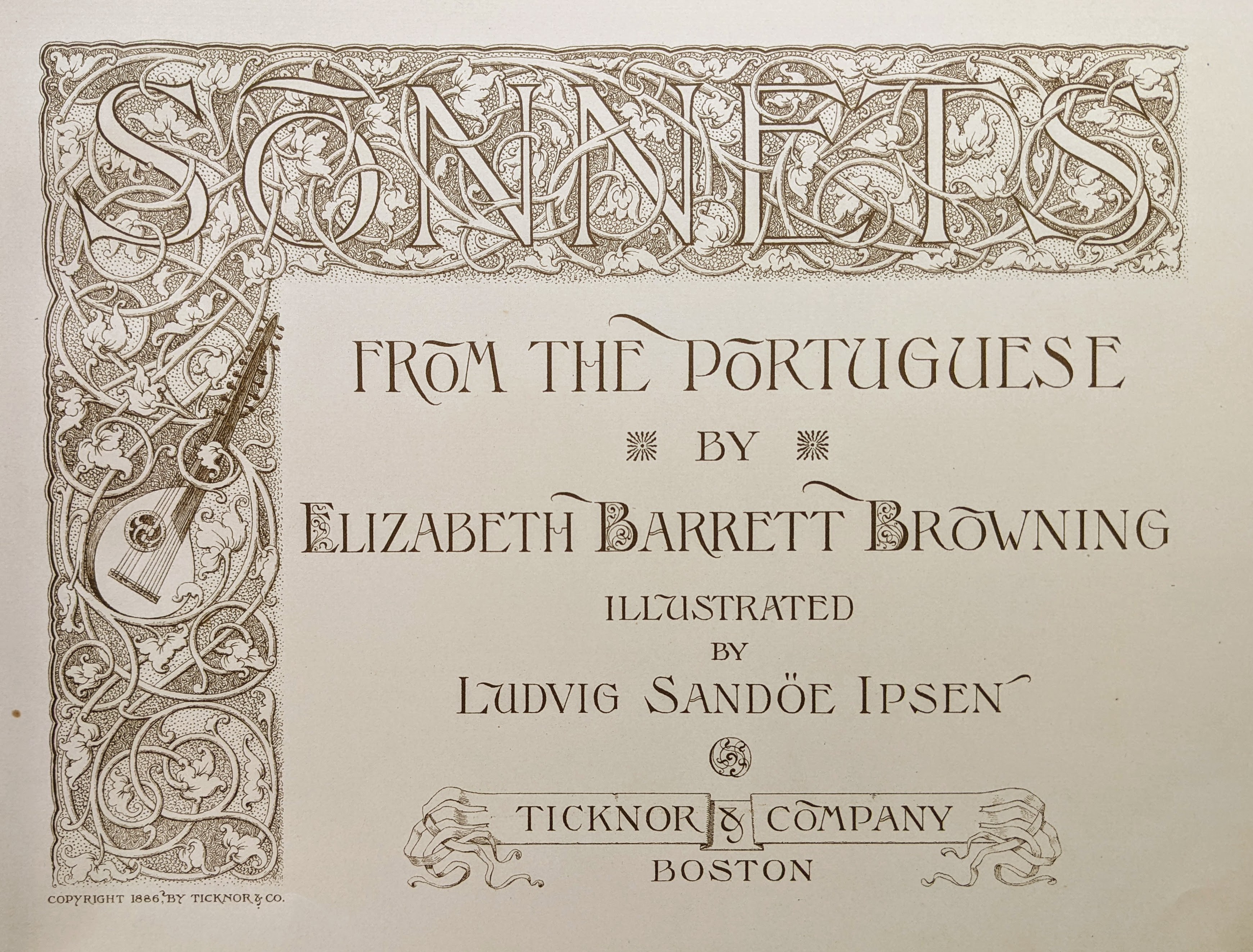
Elizabeth Barrett Browning, Sonnets from the Portuguese. Boston: Ticknor and Company, 1886. Ornament by Ludvig Sandöe Ipsen. Not the 1850 first printing. The poem is the type below.
How do I love thee?
How do I love thee? Let me count the ways.
I love thee to the depth and breadth and height
My soul can reach, when feeling out of sight
For the ends of being and ideal grace.
I love thee to the level of every day's
Most quiet need, by sun and candle-light.
I love thee freely, as men strive for right.
I love thee purely, as they turn from praise.
I love thee with the passion put to use
In my old griefs, and with my childhood's faith.
I love thee with a love I seemed to lose
With my lost saints. I love thee with the breath,
Smiles, tears, of all my life; and, if God choose,
I shall but love thee better after death.
Elizabeth Barrett Browning, Sonnets from the Portuguese 43
1859
What greater thing is there for two human souls, than to feel that they are joined for life, to strengthen each other in all labour, to rest on each other in all sorrow, to minister to each other in all pain, to be one with each other in silent unspeakable memories at the moment of the last parting?
George Eliot, Adam Bede
One person is asked to be lover, friend, home, and meaning. They counted the ways. They also knew labour, wreck, and death.
Sonnet 116 says love does not change when the person changes, even at the edge of doom. Sonnet 43 counts: depth, breadth, candle-light, the faith of childhood, and after death. Eliot's sentence is not a wedding vow. It is what two people can still be when the life includes labour, sorrow, pain, and the last parting. One person is being asked to hold all of that.
A vow made public.To one person before the world.
Sources
- Shakespeare, William. Sonnet 116. In Shake-speares Sonnets. London: Thomas Thorpe, 1609. Public domain.
- Eliot, George. Adam Bede. Edinburgh and London: William Blackwood and Sons, 1859. Chap. 54. Public domain.
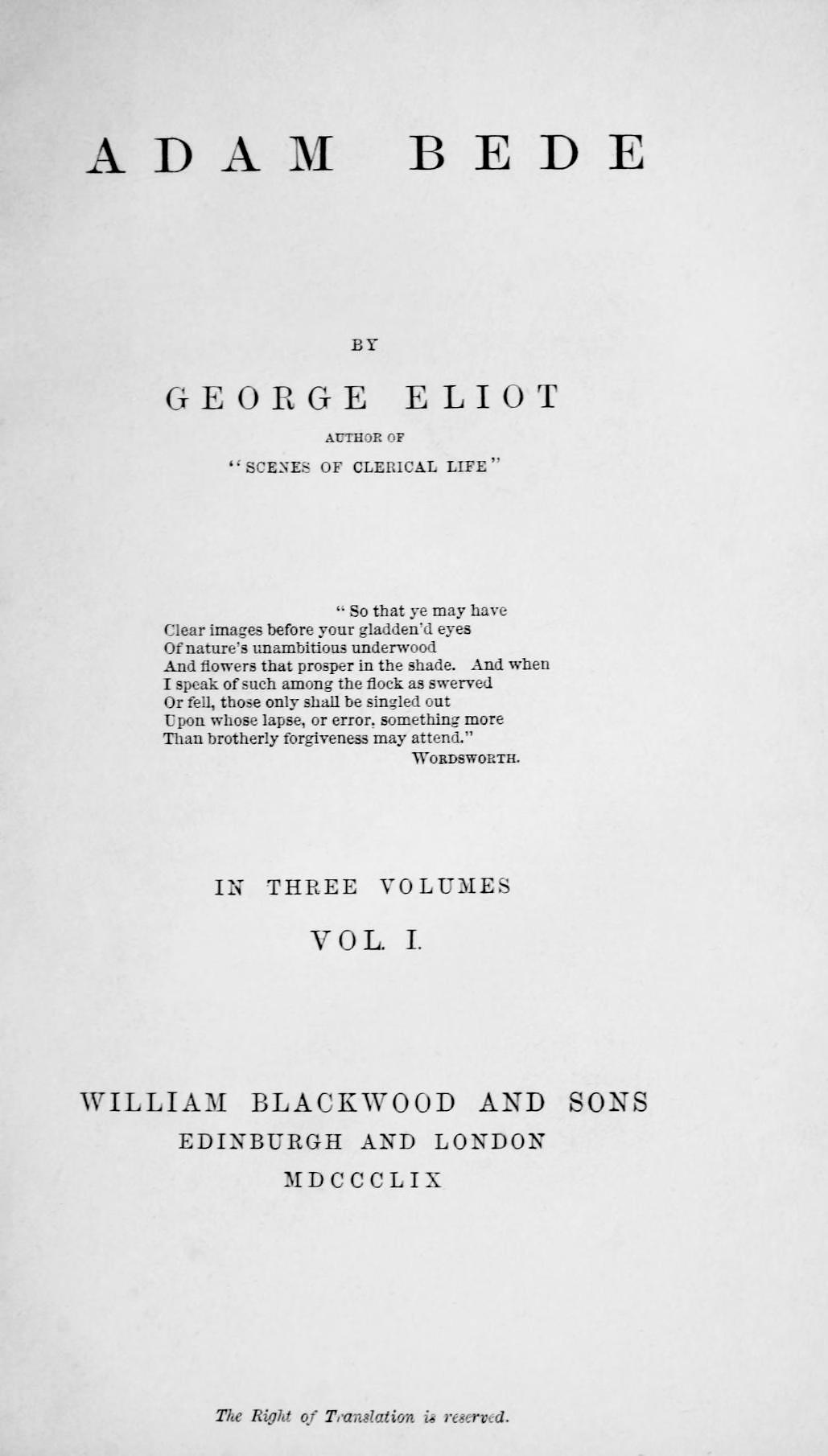
- Title page of George Eliot, Adam Bede. Edinburgh and London: William Blackwood and Sons, 1859. First edition. Public domain. The leaf is the book, not chapter 54.
- Title page of Shake-speares Sonnets. London: Thomas Thorpe, 1609. Public domain. The leaf is the book, not Sonnet 116.
- Shakespeare, William. Sonnet 116. Shake-speares Sonnets. London: Thomas Thorpe, 1609. Public domain. Spelling on the page is lightly modernized for reading.
- Browning, Elizabeth Barrett. Sonnets from the Portuguese XLIII. In Poems, 1850. Public domain. Featured from the 1850 text. Poets.org holds a public-domain presentation, not the rights in the poem.
- Browning, Elizabeth Barrett. Sonnets from the Portuguese. Boston: Ticknor and Company, 1886. Ornament by Ludvig Sandöe Ipsen. Public domain. A later beautiful printing. Not the 1850 first appearance.


